(Inspired by the book “Creativity Inc.” by Ed Catmull)
Opening: The Catch-22 of Limitations
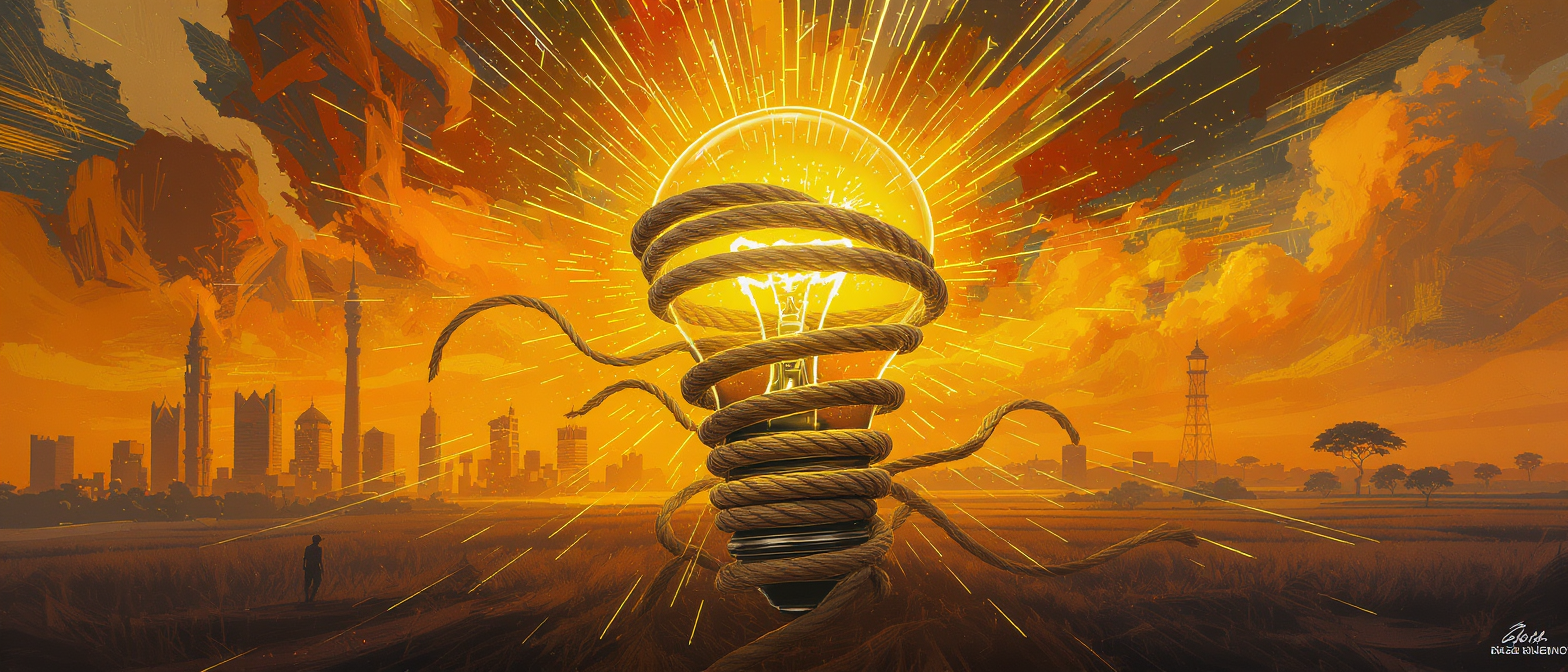
“Thinking outside the box” is revered as the pinnacle of innovation in our world, which reveres limitless imagination. What if, though, the very nature of the box inspires original thought? What if, rather than confining us, limitations encouraged us to think creatively, take bolder actions, and innovate better?
“Limits are not the enemy of creativity—they are its catalyst.” This is the surprising truth revealed by computer animation trailblazer and Pixar co-founder Ed Catmull in his book “Creativity Inc.” Working within tight constraints has, throughout Pixar’s history, produced some of the most innovative stories and technological advances.
How do you listen to the same old Carnatic songs numerous times? That’s a common inquiry from my non-Carnatic music-savvy friends. What they don’t realise is that Carnatic music is quite restrictive (rhythm, beats, emotions), so even when they play the same tune, it would sound completely different the next time around. In fact, it is precisely these restrictions that allow the musicians to be creative.
Graphics and music aren’t the only fields that can benefit from this idea. Whether we’re in the corporate world, creating art, or just trying to improve ourselves, limitations make us concentrate, try new things, and discover solutions we might have missed otherwise.
So, how exactly do constraints foster innovation? Why are they so effective, and how can we use them to our advantage?
1. How Limitations Foster Creativity
A. The Insanity of Endless Options
An intriguing phenomenon is brought to light in “The Paradox of Choice” by psychologist Barry Schwartz: decision-making becomes more challenging when individuals are presented with an excessive number of possibilities. And the same is true of imagination. Teams without limits during brainstorming sessions could go in circles without ever settling on a course of action.
Because of the constraints imposed by Pixar’s early technology, animators had to work under very specific boundaries. They made strides, like the expressive simplicity of the characters in “Toy Story”, by concentrating on what they “could” do rather than what they “could not” accomplish.
The lesson here is that limitations put an end to procrastination and make us do something instead of sitting around doing nothing.
B. Innovation Emerges from Necessity
Scarcity was the catalyst for some of history’s most groundbreaking inventions:
- The CO₂ filter fix on Apollo 13 was an emergency situation when NASA engineers had to think outside the box and use what was on board to create a solution that could have saved lives.
- The 140-character limit on Twitter, which originated as a technical limitation (SMS limits), has become an iconic aspect of contemporary discourse.
- No cold chain infrastructure and farmers’ mistrust were two huge obstacles for the Odisha-based dairy start-up Milk Mantra. Using blockchain technology for transparency and mobile chilling units, we were able to turn it around.
According to Catmull, the early Pixar films had to make do with limited resources, but it actually helped them develop better storylines and more efficient production methods.
Takeaway: In times of scarcity, originality flourishes.
C. Prioritise Focus Over Expansion
Ideas can become bloated and unfocused when there are unlimited alternatives in creative endeavours. Prioritisation is imposed by constraints.
- In Pixar’s “Braintrust” Feedback System, for instance, instead of leaving general comments like “make it better”, supervisors provide detailed suggestions for improving the story’s structure.
- “For sale: baby shoes, never worn.” – Hemingway’s Six-Word Story. Its force is in its conciseness.
- Despite Uber’s cash-heavy business strategy, Ola Cabs’ localised solutions allowed them to master mobility within restrictions.
Takeaway: Setting clear boundaries helps to hone ideas and make them stronger.
2. Making Strategic Use of Constraints
A. Establish firm limits.
- Work increases in proportion to the amount of time available, according to Parkinson’s Law. Efficiency is forced by short deadlines.
- Limitations on Funds—Rephrase the question to: “What’s the best solution within our budget?” rather than “What if money were no object?”
- Artists like Illayaraja and filmmakers like Manirathnam and KB have found that putting themselves under stringent creative constraints helps them come up with fresh ideas.
B. See Limitations as Opportunities
Apple was on the verge of insolvency when Steve Jobs got back to the firm in 1997. The iMac, iPod, and Apple’s eventual domination were all products of his efforts to streamline the company’s product line, rather than viewing this as a failure.
Try this exercise: The next time you’re stuck, ask yourself:
– How can this limitation make the solution better?
– How does this limitation offer any distinct benefits?
C. Promote Repetition Within Boundaries
Each version of a Pixar picture is refined while staying true to the story’s essential structure. This stop changes from being aimless and never-ending.
Use the method of Minimum Viable Product (MVP) development to swiftly test concepts in a business setting.
To zero in on what’s really important, use the “80/20 Rule” (Pareto Principle).
3. Authentic Instances of Limitations That Drive Achievement
A. Toy Story by Pixar – Boundless Creativity, Minimal Technology
Comparing it to modern CGI, the early work was rudimentary. Pixar adopted stylised toys instead of realistic humans, which added to the joy of the films.
B. The Early Square Photos on Instagram
Although it was once imposed as a technical limitation, the 1:1 aspect ratio has since become an aesthetic characteristic that sets Instagram apart from other platforms.
C. The Flat-Pack Revolution at IKEA
A completely new business model was born when shipping costs compelled IKEA to create furniture that could be packed flat.
D. The “Gold” Program at Zomato
By providing customised 1+1 discounts for paid members exclusively, they transformed constrained budgets into premium exclusivity, generating FOMO while ensuring eateries remained profitable.
4. Redefining “Limit”
In reframing, Catmull’s idea finds its strength. “How can we utilise this limitation as a creative lever?” is a better question to ask than “How do we overcome this limit?”
- An opportunity to be creative while being thrifty arises when funds are reduced.
- An impending due date forces you to make a choice.
- An opportunity to pioneer new ways arises from a technological difficulty.
Rapid response and teamwork are the hallmarks of a small team.
There has been a slight but revolutionary change. All of a sudden, constraints aren’t obstacles but rather guides.
5. Contemplations on My Own
I worked on an automobile project for an Indian OEM a long time ago, and our team had to come up with an in-car entertainment system for a cheap car. The Indian market was extremely price-sensitive, making the task all the more daunting for the worldwide parent business, which had established lofty standards. We were not endowed with the luxury of top-tier gear or substantial funds. Down to the last penny, every part had to prove its worth.
The constraints were annoying at first. Facing off against multinational corporations with such a small budget seems incredibly unfair. However, we were surprised to find that the limitations really helped us become more creative as the project went on.
As a foundational principle in Indian engineering, frugal innovation was our first point of study. We tailored the features to meet the demands of the local market rather than trying to imitate costly imported systems.
For example:
- We made sure that voice instructions in Indian accents were given priority, thus the system is really easy to use.
- We made sure that even with a little chip, navigation and entertainment would run smoothly by optimising memory use.
- We anticipated that not all drivers would have constant access to the internet, so we made use of offline maps that were intelligently compressed.
These answers served as more than merely fixes; they were points of differentiation. The debut of the system was a smashing success, leaving consumers and employees alike in awe. We were compelled to innovate in ways that a team with more resources may have ignored, ironically, because of our financial and technical constraints.
That is the profound significance of Catmull’s observation: being creative is not about escaping constraints but rather about flourishing within them.
Final Thoughts: The Boundless Freedom
A helpful reminder that invention doesn’t require waiting for ideal circumstances is Ed Catmull’s observation that creativity thrives under limitations. Maximising the potential of our current circumstances is the key.
“The creative mind spots the opportunity.” Catmull says, “whereas the uncreative mind spots the difference.”
Therefore, the next time you encounter a constraint, be it financial, technological, or otherwise, consider how this can force you to re-evaluate your approach. Why? Because accepting challenges, rather than trying to eliminate them, frequently leads to more significant breakthroughs.
Give an example of a limitation that has surprisingly inspired you to think outside the box. Put your thoughts down below in the comments section.